If you’ve ever wanted to dive into a dish that’s bursting with rich, umami flavors and silky textures, the Asian Steak with Soy-Mirin-Sake Sauce Recipe is going to become your new go-to. This dish perfectly balances the tender juiciness of beef tenderloin with a luscious sauce featuring three Japanese pantry staples: soy sauce, mirin, and sake. The result? A harmonious blend of savory, sweet, and subtly aromatic notes that dance on your palate with every bite. Whether you’re serving it for a casual dinner or an impressive weekend treat, this recipe is a delicious way to bring a touch of Asian-inspired magic to your kitchen.
Ingredients You’ll Need
What’s truly delightful about this recipe is how straightforward the ingredients are, yet each one plays a vital role in building the dish’s unforgettable flavor and texture. From the succulent beef tenderloin to the elegant trio of soy, mirin, and sake, every component adds its own character, making the final plate both simple and sophisticated.
- 2 beef tenderloin steaks, around 150g/5oz each: Choose steaks about 3cm thick for perfect medium rare results, juicy and tender every time.
- 1 tbsp vegetable oil (or other neutral cooking oil): Provides a clean base for searing the steak without overpowering its flavors.
- 1 tbsp soy sauce, all purpose: Adds deep umami richness that’s the backbone of the sauce.
- 2 tbsp Mirin: This sweet Japanese rice wine enhances the sauce with delicate sweetness and a hint of acidity.
- 3 tbsp cooking sake: Brings a subtle, fragrant note that elevates the sauce’s complexity.
- 45g/3 tbsp unsalted butter: Melts into the sauce for incredible silkiness and mouthfeel.
- 1 small garlic clove, minced: Gives a sharp, aromatic punch that complements the savory elements beautifully.
- 1/2 tsp ginger, minced (optional): Adds a gentle warmth and freshness that lifts the overall flavor.
- 3 tsp shallots/scallions (green part) or chives, finely chopped: Splashes of green add brightness and a mild oniony crunch as garnish.
How to Make Asian Steak with Soy-Mirin-Sake Sauce Recipe
Step 1: Preparing Your Steak
First things first, take your steaks out of the fridge about 20 minutes before cooking so they reach room temperature. This ensures they cook evenly and stay juicy inside, especially important if you want that perfect medium rare finish.
Step 2: Mixing the Sauce
While the steaks rest, whisk together the soy sauce, mirin, and sake in a small bowl. This is the magic mixture that will transform a simple steak into a flavorful masterpiece, combining sweetness, saltiness, and a subtle boozy aroma.
Step 3: Cooking the Steak
Heat the vegetable oil in a skillet over medium-high heat until it just starts to smoke — this high heat sears the steak beautifully, locking in its juices. Cook the steaks for about 3 minutes on the first side and 2 minutes on the second if your steaks are about 3cm thick, aiming for that ideal medium rare. Adjust according to thickness and your preferred doneness.
Step 4: Resting the Steak
Once cooked, transfer the steaks onto a plate and loosely cover them with foil. This resting period is crucial because it allows the juices to redistribute throughout the meat, making each bite tender and succulent instead of dry.
Step 5: Preparing the Sauce
Let the skillet cool slightly, then place it back on the stove over medium-high heat. Pour in the pre-mixed sauce and bring it to a simmer. Toss in the butter and stir until it melts completely and integrates into the sauce, creating a silky, glossy finish.
Step 6: Adding Aromatics to the Sauce
Remove the pan from heat and stir in the minced garlic, ginger, and most of the shallots or scallions (reserving some for garnish). The sauce will thicken slightly as it cools, becoming that perfect glaze to adorn your steak.
Step 7: Serving the Steak
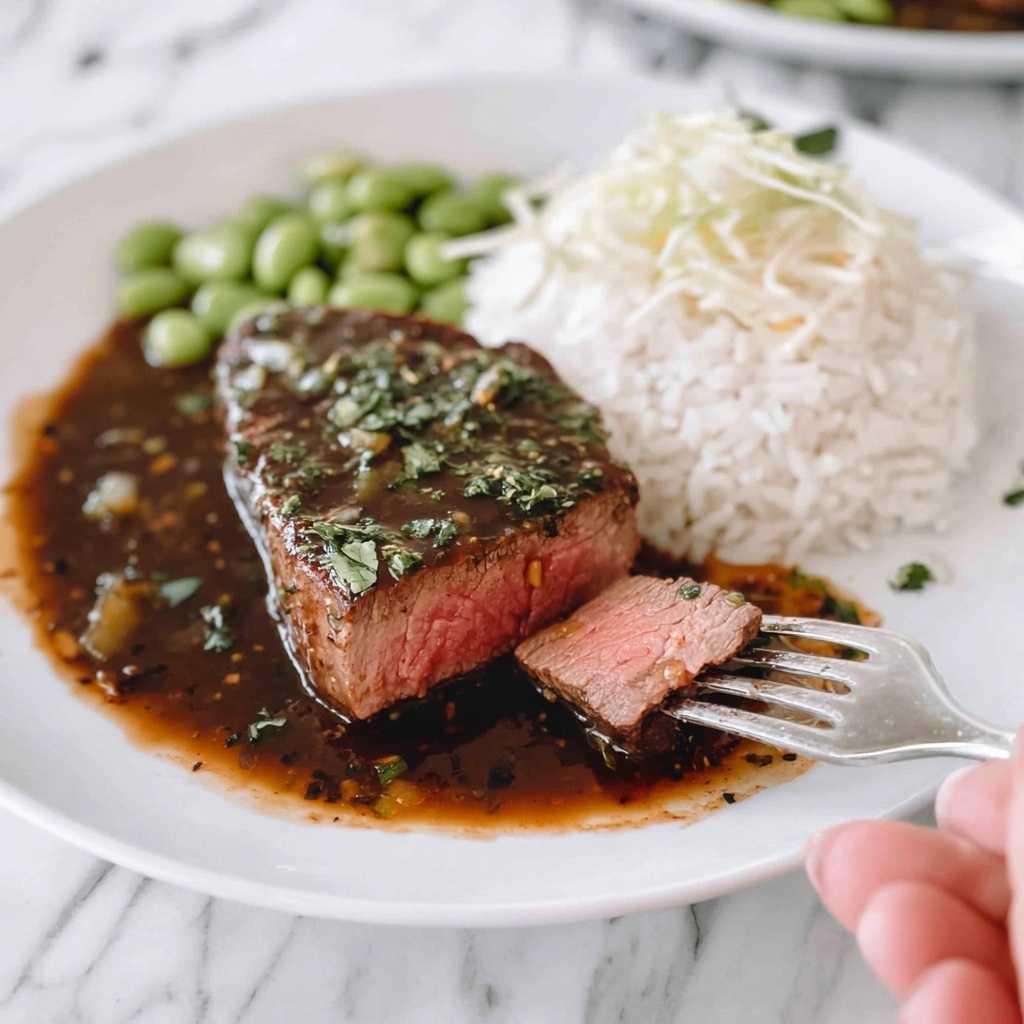
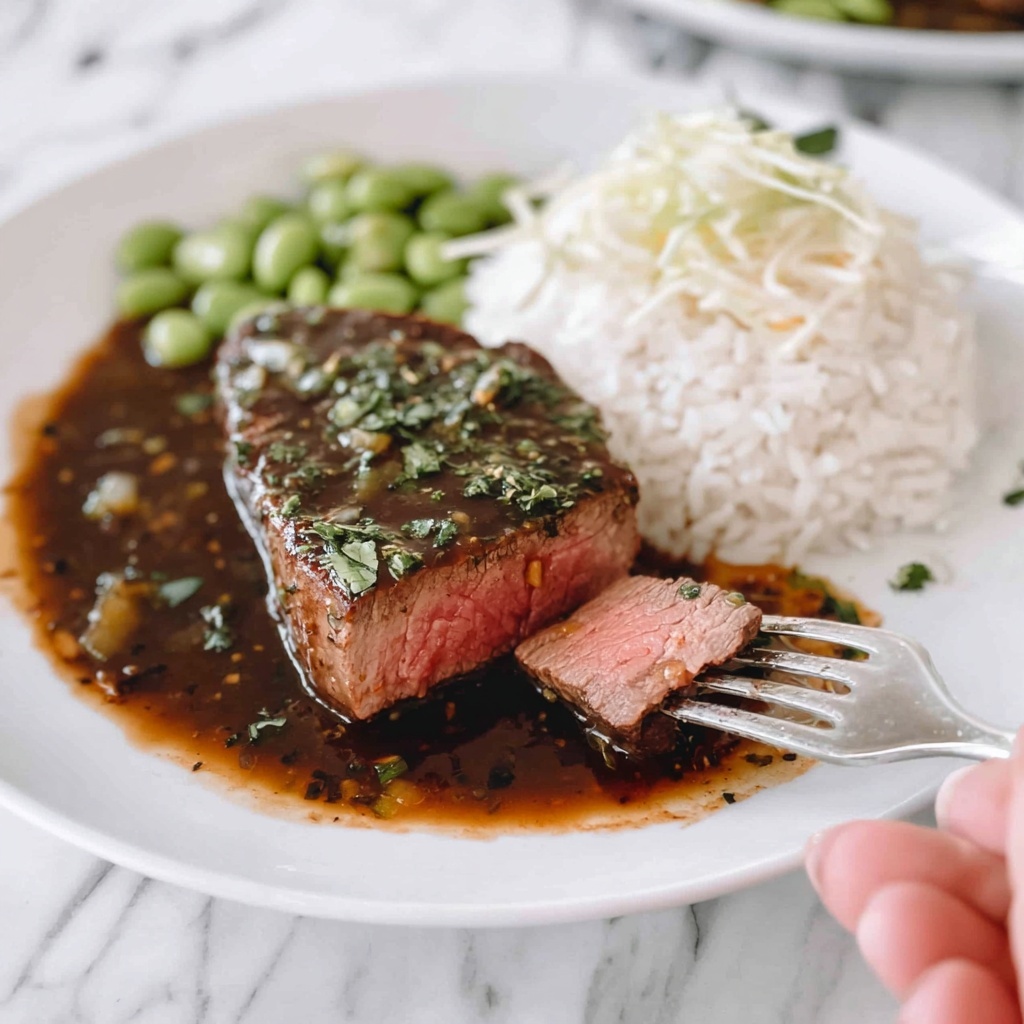
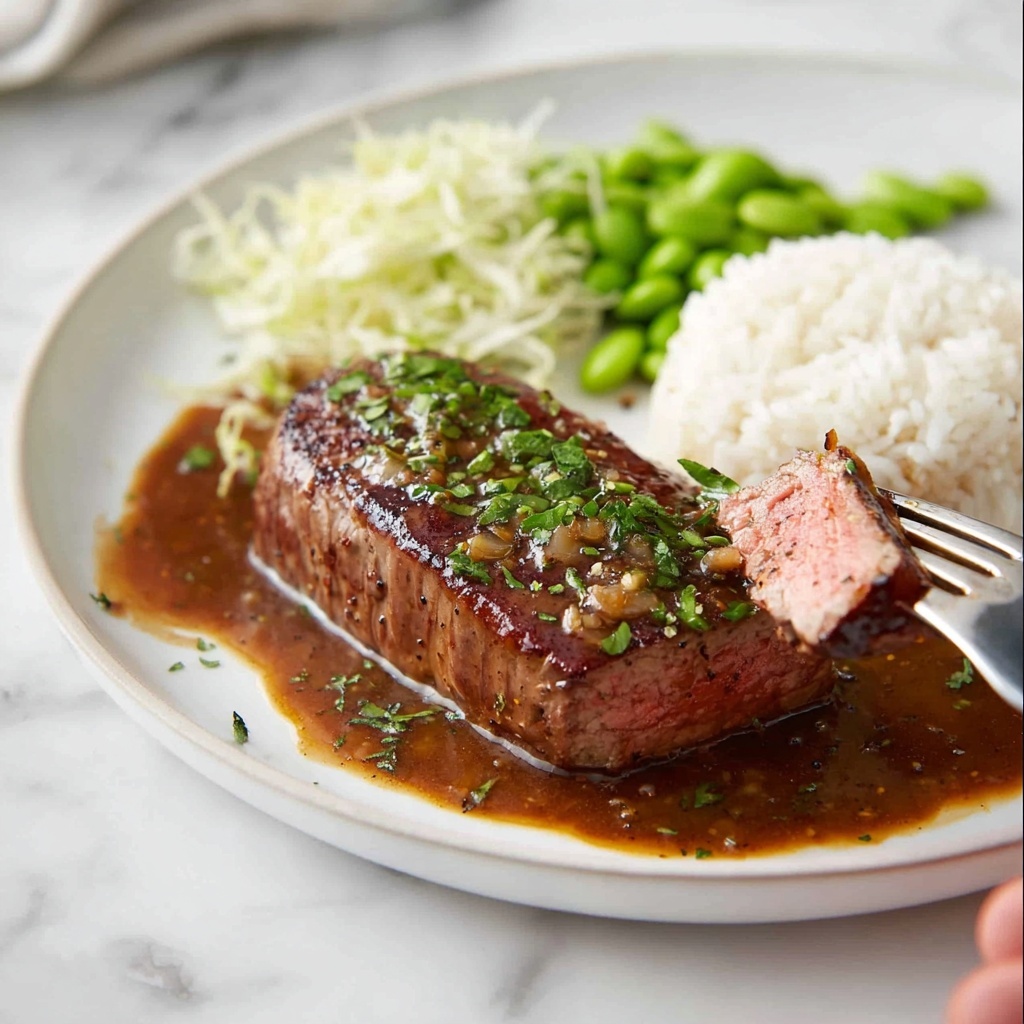
Place the rested steaks on plates and lavish them with the rich, flavorful sauce. I love serving this dish with finely shredded raw cabbage (a traditional Japanese accompaniment), fluffy white rice, and some steamed edamame for a complete and balanced meal.
How to Serve Asian Steak with Soy-Mirin-Sake Sauce Recipe
Garnishes
Finely chopped scallions or chives sprinkled on top add freshness and an inviting pop of green. You can also add a few toasted sesame seeds for crunch and a nutty undertone, which beautifully complements the soy-mirin-sake flavor profile.
Side Dishes
This dish shines when accompanied by simple, clean sides that let the steak and sauce take center stage. Classic choices include steamed white rice to soak up every drop of sauce, shredded cabbage for crunch, or even blanched green vegetables like snap peas or bok choy to add color and crispness.
Creative Ways to Present
For a bit of flair, try serving your steak thinly sliced across a long platter lined with microgreens or radish slices. Drizzle the sauce over the top and scatter your garnishes artistically. This not only looks impressive but makes it easy for everyone to grab perfect bites of tender steak and sauce together.
Make Ahead and Storage
Storing Leftovers
If you have leftovers, store the steak and sauce separately in airtight containers in the fridge. Keeping the sauce apart prevents the steak from becoming soggy and preserves the texture of both components for up to 2 days.
Freezing
Although steak is best enjoyed fresh, you can freeze the cooked steaks wrapped tightly to prevent freezer burn. Freeze the sauce in a separate container. When ready to enjoy, thaw overnight in the fridge and reheat gently to keep that fresh flavor experience.
Reheating
Reheat steaks low and slow in a pan or oven to maintain tenderness. Warm the sauce separately and combine just before serving to bring back that glossy finish and vibrant taste. Avoid microwaving steaks directly as it can toughen the meat.
FAQs
Can I use a different cut of beef for this recipe?
Absolutely! While beef tenderloin is ideal for its tenderness, sirloin or ribeye can also work well. Just adjust the cooking time to suit the thickness and marbling of the cut you choose.
What can I substitute if I don’t have mirin or sake?
If you can’t find mirin, a combination of dry sherry or sweet Marsala wine with a little sugar works as a good substitute. For sake, dry white wine or a light rice vinegar diluted with water can mimic its properties, although the flavor profile will be slightly different.
Is this recipe spicy?
No, the Asian Steak with Soy-Mirin-Sake Sauce Recipe is not spicy but instead relies on a balance of sweet, savory, and aromatic flavors. You can add a pinch of chili flakes or a dash of chili oil if you prefer a heat kick.
Can I prepare the sauce ahead of time?
Yes, you can mix the soy, mirin, and sake in advance and store it in the fridge for up to 24 hours. Just add the butter, garlic, ginger, and shallots fresh when making the sauce to keep those bright, fresh flavors intact.
How do I know when the steak is cooked perfectly?
For medium rare, aim for about 3 minutes per side on a 3cm thick steak over high heat. Using a meat thermometer, look for an internal temperature around 130°F (54°C). Remember, steak will continue to cook slightly during resting.
Final Thoughts
This Asian Steak with Soy-Mirin-Sake Sauce Recipe holds a special place in my heart for its combination of simplicity, deep flavors, and elegant presentation. It’s the kind of meal that feels both comforting and refined, perfect for impressing guests or treating yourself after a long day. Give it a try, and I guarantee it will quickly become one of your favorite dishes to make and savor.
Print
Asian Steak with Soy-Mirin-Sake Sauce Recipe
- Prep Time: 5 minutes
- Cook Time: 10 minutes
- Total Time: 15 minutes
- Yield: 2 servings
- Category: Main Course
- Method: Frying
- Cuisine: Japanese
Description
This Asian Steak recipe features tender beef tenderloin steaks cooked to medium rare and served with a rich, flavorful sauce made from soy sauce, Mirin, sake, butter, garlic, ginger, and shallots. The dish is quick and easy to prepare, combining classic Japanese ingredients and techniques for a delicious, restaurant-quality meal perfect for two.
Ingredients
Steak and Cooking
- 2 beef tenderloin steaks, around 150g/5oz each
- 1 tbsp vegetable oil (or other neutral cooking oil)
Sauce
- 1 tbsp soy sauce, all purpose
- 2 tbsp Mirin
- 3 tbsp cooking sake
- 45g/3 tbsp unsalted butter
- 1 small garlic clove, minced
- 1/2 tsp ginger, minced (optional)
- 3 tsp shallots/scallions (green part) or chives, finely chopped
Instructions
- Prepare the steak: Take the steak out of the fridge 20 minutes prior to cooking to allow it to come to room temperature, ensuring even cooking. If it’s very hot outside, reduce this time to 10 minutes.
- Make the sauce mixture: Combine the soy sauce, Mirin, and sake in a small bowl and set aside.
- Cook the steak: Heat the vegetable oil in a skillet over medium-high heat until it begins to smoke. Add the steaks and cook for about 3 minutes on the first side and 2 minutes on the second side for medium rare, adjusting time based on thickness and preference.
- Rest the steak: Transfer the cooked steaks to a plate and cover loosely with foil. Let them rest for 5 minutes to allow juices to redistribute.
- Prepare the sauce in the skillet: Allow the skillet to cool slightly, then return to medium-high heat. Pour in the sauce mixture and bring it to a simmer. Add the butter and let it melt completely, incorporating it into the sauce, then remove the skillet from the heat immediately.
- Finish the sauce: Stir in the minced garlic, minced ginger (if using), and 2 teaspoons of the chopped shallots or scallions. The sauce should thicken slightly; if not, continue stirring as the sauce thickens further while cooling.
- Serve: Place the rested steaks on plates, spoon the warm sauce over them, and garnish with the remaining shallots. This dish pairs well with shredded cabbage, white rice, and edamame on the side for a balanced meal.
Notes
- Allowing the steak to rest after cooking helps retain its juices and keep it tender.
- If you prefer less alcohol flavor, you can reduce the Mirin and sake slightly.
- Ginger is optional but adds a pleasant warmth and depth to the sauce.
- Use a neutral oil like vegetable or canola oil for searing to avoid overpowering flavors.
- To ensure even cooking, make sure steaks are roughly the same thickness.
- Serving with traditional Japanese sides like shredded cabbage and edamame enhances the authentic experience.