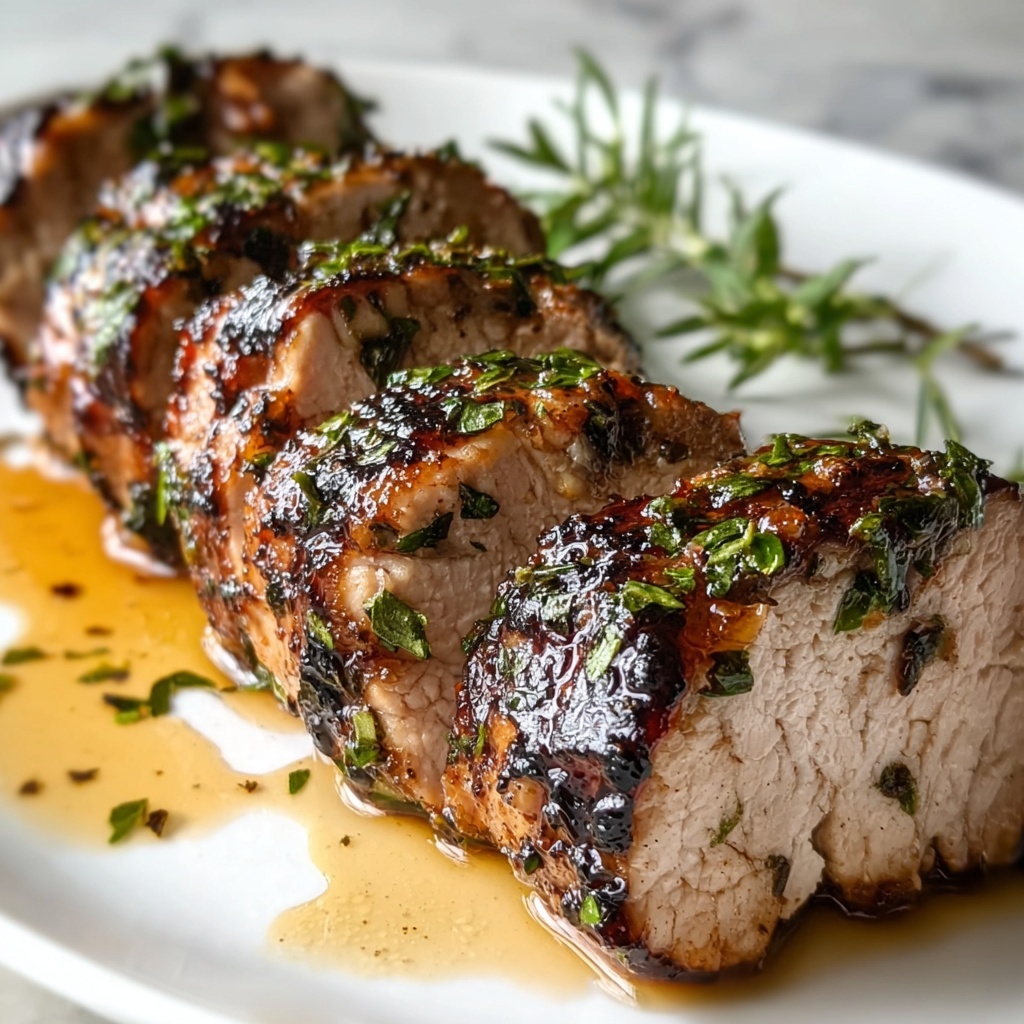
If you have been looking for a dish that brings together tender meat and fresh, vibrant flavors, then this Garlic Herb Pork Tenderloin Recipe is exactly what your dinner table needs. It’s a perfect blend of garlic, rosemary, thyme, and lemon that creates an irresistible marinade, making the pork tenderloin juicy, flavorful, and beautifully aromatic. Whether you’re cooking for family, hosting friends, or just treating yourself, this recipe is a warm hug in culinary form that’s surprisingly straightforward yet impressive every time.
Ingredients You’ll Need
Choosing the right ingredients is key to nailing this Garlic Herb Pork Tenderloin Recipe. Each component plays its part—from the fresh herbs adding brightness to the olive oil that keeps the meat succulent, every item is simple but essential.
- Pork tenderloin (1 to 1.5 pounds): The star of the dish, lean and tender for the perfect roast.
- Garlic (4 cloves, minced): Provides a pungent and aromatic foundation that elevates the flavor.
- Fresh rosemary (2 tablespoons, chopped): Adds an earthy, pine-like aroma that complements pork beautifully.
- Fresh thyme (2 tablespoons, chopped): Offers subtle, herbaceous notes for depth.
- Fresh parsley (1 tablespoon, chopped): Brings a fresh, vibrant touch to the marinade.
- Salt (1 teaspoon): Enhances all the flavors and helps tenderize the meat.
- Black pepper (1/2 teaspoon): Adds a gentle heat and complex flavor.
- Olive oil (3 tablespoons): Keeps the pork moist while adding richness.
- Balsamic vinegar (2 tablespoons): Introduces a tangy sweetness to balance the herbs.
- Dijon mustard (1 teaspoon): Adds a subtle sharpness and helps emulsify the marinade.
- Lemon zest (zest of 1 lemon): Brings bright citrus oils for a livelier flavor profile.
- Lemon juice (juice of 1 lemon): Adds acidity which tenderizes and freshens the meat.
How to Make Garlic Herb Pork Tenderloin Recipe
Step 1: Preheat Your Oven
Get your oven ready by setting it to 400°F (200°C). This temperature is ideal for roasting the tenderloin to a juicy, golden perfection while ensuring it stays tender and evenly cooked inside.
Step 2: Create the Herb Garlic Marinade
In a small bowl, whisk together minced garlic, freshly chopped rosemary, thyme, parsley, salt, black pepper, olive oil, balsamic vinegar, Dijon mustard, lemon zest, and lemon juice. This marinade is where all the magic starts—each ingredient blends to infuse the pork with layers of savory, tangy, and herby goodness.
Step 3: Prepare the Pork
Rinse the pork tenderloin under cool running water and gently pat it dry with paper towels. Doing this ensures the marinade clings better, giving the pork a more intense flavor.
Step 4: Marinate the Meat
Place the pork tenderloin in a large zip-top bag or shallow dish, then pour the marinade over it. Massage the marinade into the meat, making sure every inch is coated evenly. Seal the bag or cover the dish, and pop it into the refrigerator. Marinate for at least 30 minutes to let those wonderful flavors soak in, but if you can wait 2 to 4 hours, the taste will be unbeatable.
Step 5: Bring to Room Temperature
Take the marinated pork out of the fridge about 15 minutes before cooking. Allowing it to reach room temperature helps the tenderloin cook more evenly, avoiding any cold centers.
Step 6: Sear the Pork
Heat a large oven-safe skillet over medium-high heat and add a splash of olive oil if needed. Sear the pork tenderloin for 2 to 3 minutes on each side. This step locks in the juices and forms a deliciously browned crust that adds both texture and flavor.
Step 7: Roast to Perfection
Transfer the hot skillet to your preheated oven and roast the pork for about 15 to 20 minutes. Use a meat thermometer to check that the internal temperature has reached 145°F (63°C) for perfect doneness—juicy and slightly pink in the center.
Step 8: Let It Rest
Remove the pork from the oven and place it on a cutting board. Tent it loosely with foil and let it rest for 5 to 10 minutes. Resting allows the juices to redistribute throughout the meat so every bite is succulent and flavorful.
Step 9: Slice and Serve
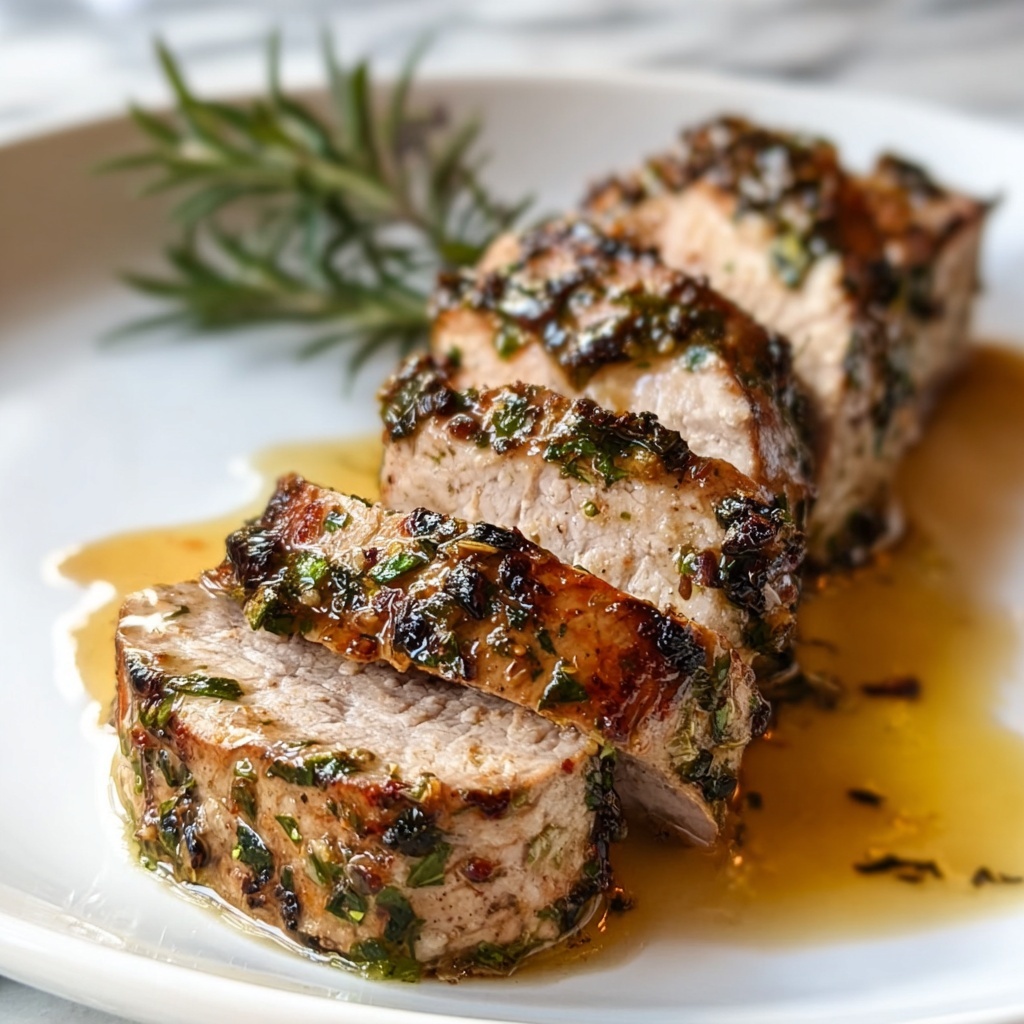
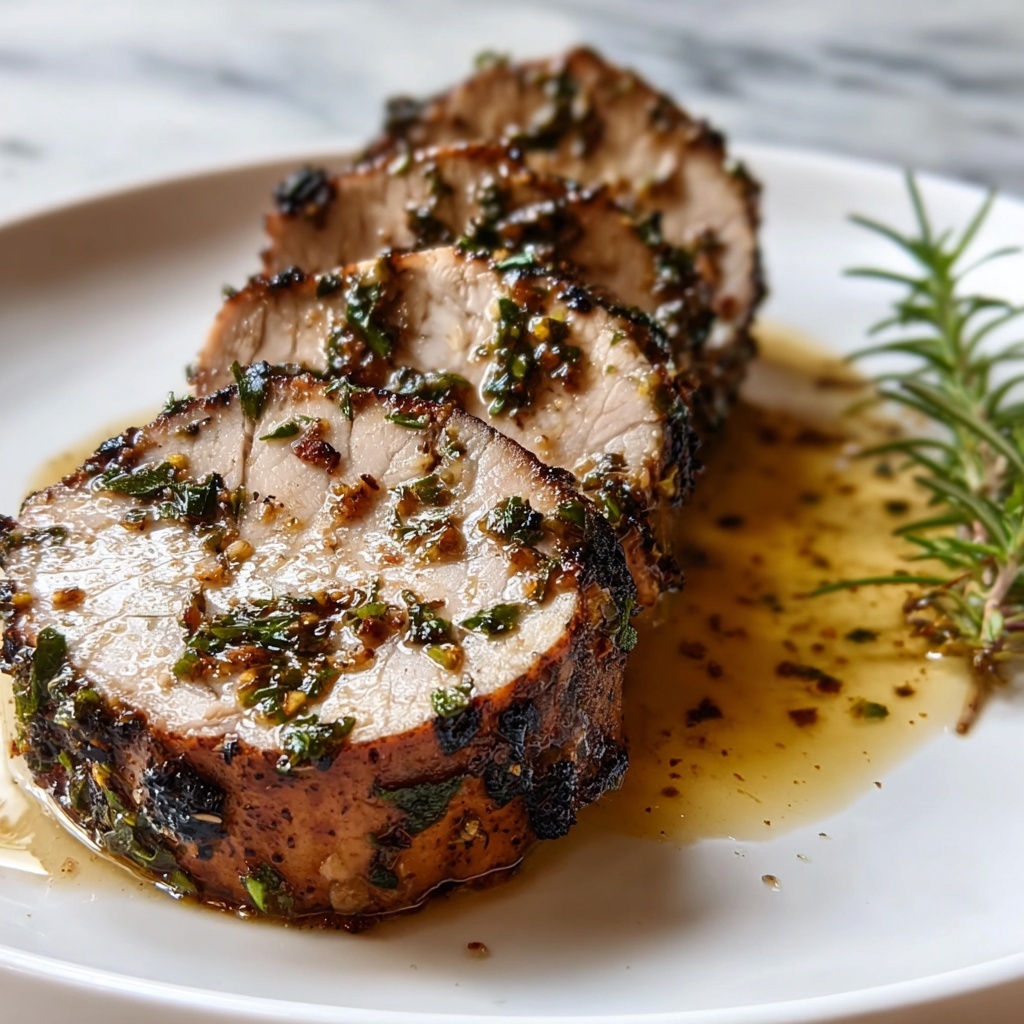
Slice the pork tenderloin into medallions, arrange them on a plate, and drizzle any remaining pan juices over the top. This simple final touch adds an extra layer of rich flavor that pulls the whole dish together beautifully.
How to Serve Garlic Herb Pork Tenderloin Recipe
Garnishes
For a fresh finish, sprinkle additional chopped parsley or thyme over the sliced pork. A light drizzle of extra virgin olive oil or a few lemon wedges on the side can brighten up the plate and make each serving pop with color and aroma.
Side Dishes
This Garlic Herb Pork Tenderloin Recipe pairs wonderfully with a variety of sides. Consider creamy mashed potatoes to complement the tender meat, roasted seasonal vegetables for earthiness, or a crisp green salad for a refreshing contrast. Each side adds texture and balances the rich flavors.
Creative Ways to Present
Serve the pork medallions atop a bed of herbed couscous or wild rice for a sophisticated look. You can also lay slices over a fresh spinach salad with toasted nuts and cranberries to add layers of texture and taste that are sure to wow your guests.
Make Ahead and Storage
Storing Leftovers
Store any leftover pork tenderloin slices in an airtight container in the refrigerator. They’ll stay flavorful and safe to eat for up to 3 to 4 days. Keep the juices from the original cooking to drizzle over leftovers and maintain moisture.
Freezing
If you want to keep the pork longer, wrap the cooked slices tightly in plastic wrap and then place them in a freezer-safe bag or container. Frozen pork tenderloin can last up to 3 months without sacrificing much flavor or texture.
Reheating
To reheat, gently warm the pork slices in a skillet over low heat or in the oven at 300°F (150°C) with a little broth or water to avoid drying out. Reheat just until warmed through to preserve tenderness and juiciness.
FAQs
Can I use dried herbs instead of fresh for this recipe?
Absolutely! The recipe even suggests substituting fresh rosemary and thyme with dried versions if needed—just use about half the amount of dried herbs since they are more concentrated.
How do I know when the pork tenderloin is fully cooked?
The best way to check doneness is with a meat thermometer. When the internal temperature hits 145°F (63°C), the pork is safe to eat and will be juicy with a slight pink center.
Can I marinate the pork overnight?
Yes! Marinating overnight will intensify the flavors even more. Just be sure to keep it covered and refrigerated for food safety.
What if I don’t have a meat thermometer?
You can cut into the thickest part of the tenderloin to check the color. It should be mostly white with a hint of pink in the center. However, using a thermometer is the safest and most accurate method.
Is this recipe suitable for grilling instead of oven roasting?
Definitely! You can grill the marinated pork tenderloin over medium heat, turning occasionally, until it reaches the same internal temperature. Grilling adds a wonderful smoky char to this Garlic Herb Pork Tenderloin Recipe.
Final Thoughts
This Garlic Herb Pork Tenderloin Recipe is one of those feel-good dishes that’s surprisingly easy but tastes like you’ve spent hours in the kitchen. The harmony of fresh herbs, garlic, and lemon turns a simple pork tenderloin into a flavorful centerpiece any night of the week. I can’t wait for you to try it and experience that perfect balance of tender meat and zesty, herby freshness that makes everyone ask for seconds.
Print
Garlic Herb Pork Tenderloin Recipe
- Prep Time: 0h 45m
- Cook Time: 0h 25m
- Total Time: 1h 10m
- Yield: 4 servings
- Category: Main Course
- Method: Roasting
- Cuisine: American
Description
This Garlic Herb Pork Tenderloin recipe features a succulent and flavorful pork tenderloin marinated in a fragrant blend of garlic, fresh herbs, lemon, and balsamic vinegar. The tenderloin is seared to a golden crust on the stovetop and then roasted to juicy perfection in the oven. Ideal for a hearty yet elegant meal, this dish combines Mediterranean-inspired flavors with simple, fresh ingredients.
Ingredients
Pork Tenderloin
- 1 pork tenderloin (about 1 to 1.5 pounds)
Marinade
- 4 cloves garlic, minced
- 2 tablespoons fresh rosemary, chopped (or 1 tablespoon dried rosemary)
- 2 tablespoons fresh thyme, chopped (or 1 tablespoon dried thyme)
- 1 tablespoon fresh parsley, chopped
- 1 teaspoon salt
- 1/2 teaspoon black pepper
- 3 tablespoons olive oil
- 2 tablespoons balsamic vinegar
- 1 teaspoon Dijon mustard
- Zest of 1 lemon
- Juice of 1 lemon
Instructions
- Preheat Oven: Preheat your oven to 400°F (200°C) to prepare for roasting the pork tenderloin.
- Prepare Marinade: In a small mixing bowl, combine minced garlic, chopped rosemary, thyme, parsley, salt, black pepper, olive oil, balsamic vinegar, Dijon mustard, lemon zest, and lemon juice. Mix thoroughly to create the marinade.
- Prepare Pork: Rinse the pork tenderloin under cold water and pat dry with paper towels to help the marinade adhere better.
- Marinate: Place the pork tenderloin in a large zip-top bag or shallow dish and pour the marinade over it, ensuring even coating. Seal or cover and refrigerate for at least 30 minutes, ideally 2 to 4 hours for best flavor.
- Bring to Room Temperature: Remove the pork from the refrigerator and let it sit at room temperature for about 15 minutes to promote even cooking.
- Sear the Pork: Heat a large oven-safe skillet over medium-high heat. Add olive oil if needed. Sear the pork tenderloin for 2-3 minutes on each side until a browned crust forms.
- Roast: Transfer the skillet to the preheated oven and roast for 15-20 minutes, or until the internal temperature reaches 145°F (63°C) measured with a meat thermometer.
- Rest the Meat: Remove the pork from the oven, transfer to a cutting board, and cover loosely with aluminum foil. Let rest for 5-10 minutes to allow juices to redistribute.
- Slice and Serve: Slice the pork tenderloin into medallions and serve warm, drizzling any remaining skillet juices over the slices for added flavor.
Notes
- Marinating the pork for longer (up to 4 hours) enhances flavor and tenderness.
- Use an instant-read meat thermometer to ensure the pork is perfectly cooked without overcooking.
- If you don’t have fresh herbs, dried herbs can be used at half the quantity.
- Letting the meat rest after roasting prevents juices from running out and keeps it moist.
- Leftover pork tenderloin is great for sandwiches or salads the next day.