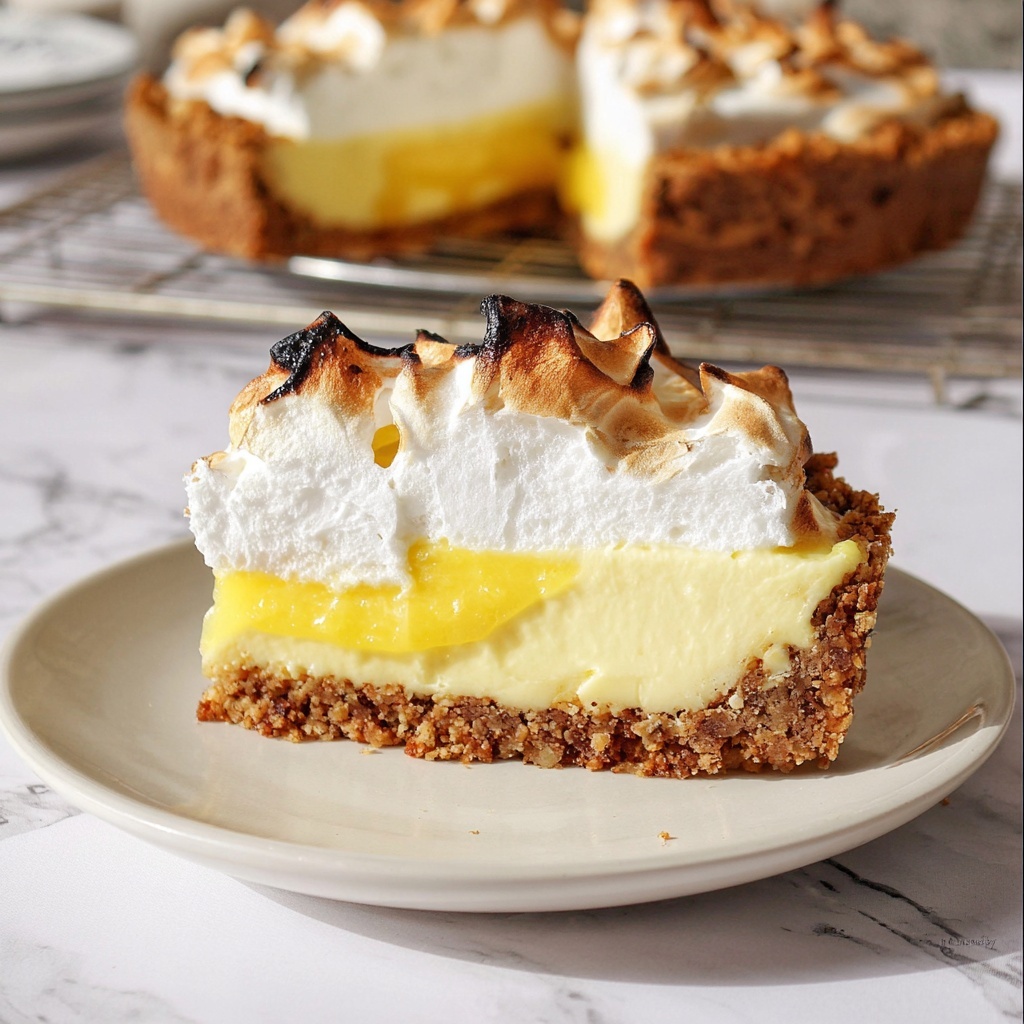
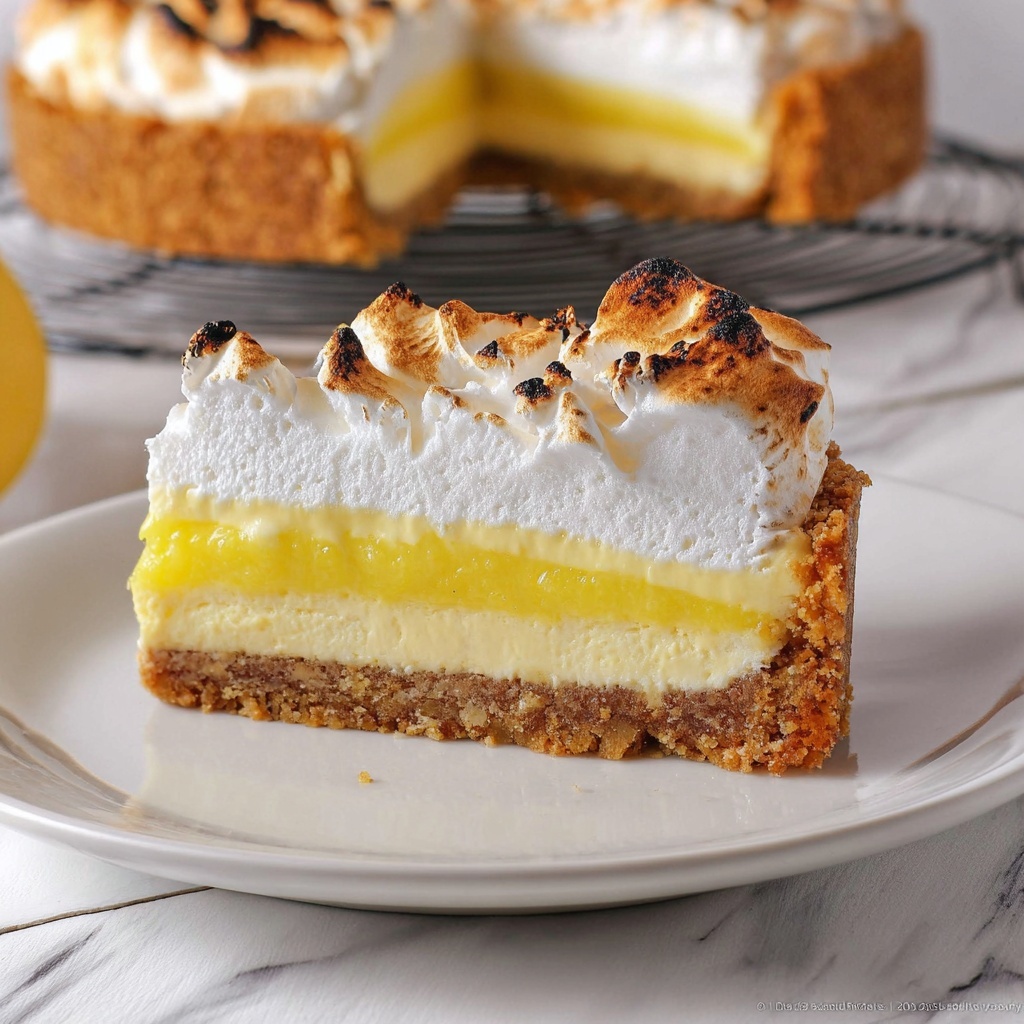
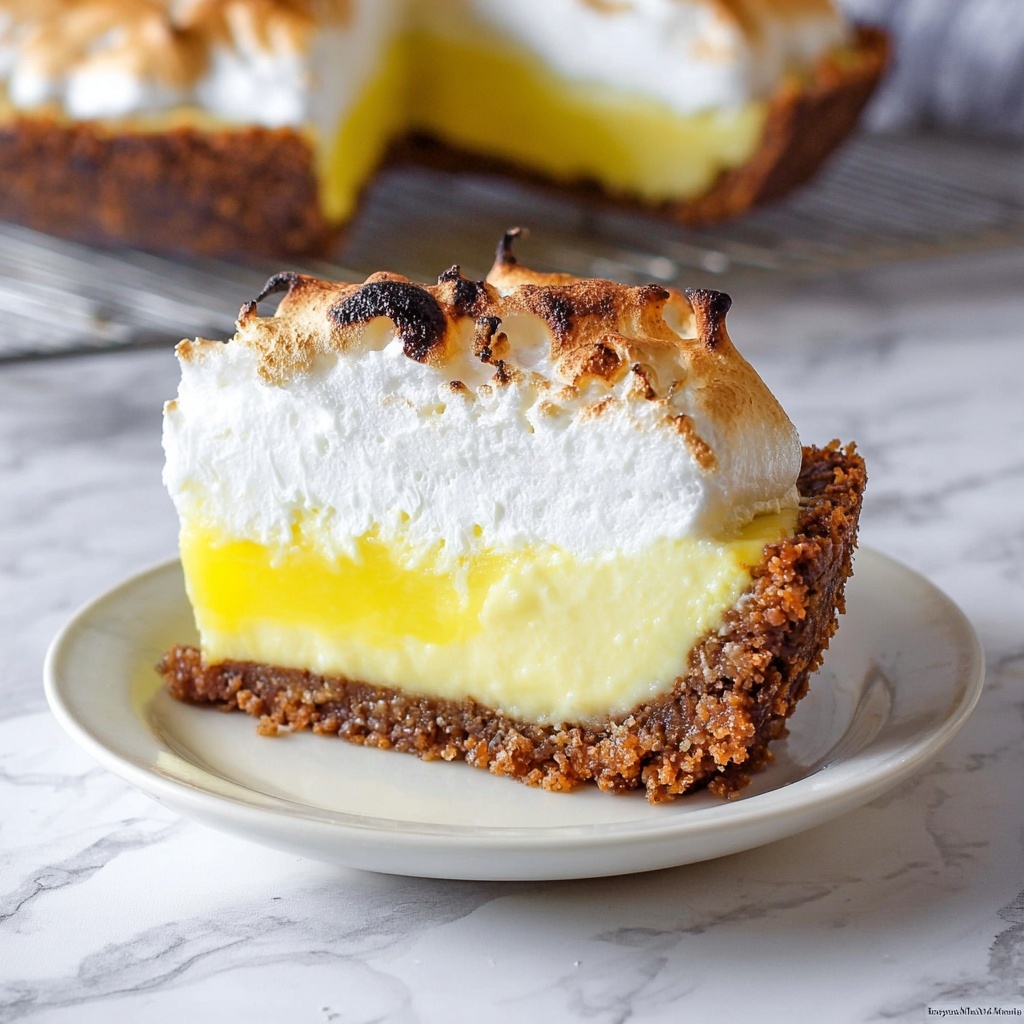
If you are a fan of bright, zesty desserts with a wonderfully creamy texture, then this Lemon Meringue Cheesecake Recipe is going to become your new obsession. Imagine the buttery graham cracker crust, a luscious lemon-infused cheesecake that melts in your mouth, topped with a perfectly toasted, fluffy meringue that adds an airy contrast both in texture and sweetness. This dish beautifully combines the tang of fresh lemon with the richness of cream cheese, creating an irresistible dessert that will impress any guest or simply elevate your own dessert experience at home.
Ingredients You’ll Need
Gathering simple, quality ingredients is the first step to mastering the Lemon Meringue Cheesecake Recipe. Each element plays a critical role in creating the perfect balance of flavors and textures, from the buttery crust to the tangy lemon curd and that delicate, cloud-like meringue topping.
- Graham cracker crumbs: These form the buttery, crunchy base that supports the creamy cheesecake filling.
- Sugar: Used both in the crust and the filling, it adds sweetness that balances the tart lemon notes.
- Butter (melted): Binds the crumbs together and adds a rich flavor to the crust.
- Cream cheese (softened): The star ingredient providing that signature creamy, velvety texture.
- Sour cream: Adds a subtle tang and silkiness to the cheesecake texture.
- Eggs (room temperature): Essential for structure and smoothness in the cheesecake batter.
- Fresh squeezed lemon juice: Brings bright, natural citrus flavor that wakes up the palate.
- GOODMAN’s lemon extract: Intensifies lemon flavor, giving the cheesecake an aromatic lift.
- Vanilla extract: Adds warmth and depth to balance the lemon’s brightness.
- Lemon curd: A rich, tangy layer that enhances the lemon experience.
- Egg whites: Whipped to create the light and airy meringue topping.
- Cream of tartar: Stabilizes the meringue for perfect peaks.
How to Make Lemon Meringue Cheesecake Recipe
Step 1: Prepare the Crust
Start by grinding your graham crackers into fine crumbs using a blender or food processor, or simply use pre-packaged crumbs if that’s easier. Mix the crumbs with sugar and melted butter, then firmly press this mixture into the base of your springform pan lined with parchment. This crust will provide the perfect foundation, firm yet tender, giving you a nice crunch in every bite.
Step 2: Warm Up That Oven
Preheat your oven to 350 degrees Fahrenheit. This temperature is ideal for baking the cheesecake slowly to develop a silken texture without cracking.
Step 3: Make the Cheesecake Filling
In your stand mixer, blend the softened cream cheese with sour cream, sugar, and lemon juice until smooth and lump-free. Scrape down the sides to ensure everything is evenly mixed. Now, add the eggs, one at a time, blending gently after each addition. Finally, stir in the GOODMAN’s lemon extract and the vanilla for that extra punch of flavor. Pour this luscious filling evenly over your prepared crust. For moisture during baking, place a small dish of water on the oven’s bottom rack to keep the cheesecake perfectly moist as it cooks.
Step 4: Bake and Cool
Bake for about an hour, then turn off the oven and leave the cheesecake inside to settle for an additional 20 minutes; this helps prevent cracks and ensures a creamy center. Keep an eye on it—if the top starts browning too quickly, you can tent with aluminum foil to avoid burning.
Step 5: Add the Lemon Curd
Once the cheesecake has cooled to room temperature, spread a generous layer of tangy lemon curd over the top. This layer is jammy and vibrant, adding a burst of citrus that complements the creamy base. Wrap the pan with foil and refrigerate overnight for the best set.
Step 6: Prepare the Meringue
Hours before serving, whip the egg whites with cream of tartar until soft peaks form. Gradually add sugar and continue whipping until you achieve stiff, glossy peaks. This meringue topping is a showstopper—airy, sweet, and fluffy, it contrasts beautifully with the rich cheesecake.
Step 7: Top the Cheesecake with Meringue
Spoon the whipped meringue onto the chilled cheesecake, mounding it in peaks using the back of a spoon for that classic lemon meringue look. Be sure to seal the edges to fully encase the cheesecake for maximum flavor harmony.
Step 8: Brown the Meringue
Pop the cheesecake into a 400-degree oven for just a few minutes to toast the meringue until it turns a gorgeous golden brown. Watch it carefully—the meringue can go from perfect to burnt quickly. The result is a beautifully caramelized, delicate topping that is both visually stunning and delectable.
How to Serve Lemon Meringue Cheesecake Recipe
Garnishes
A lightly sugared lemon slice on the side not only looks charming but also adds a fresh citrus aroma as you dig in. You can also sprinkle a tiny bit of lemon zest atop the meringue for an extra pop of color and brightness.
Side Dishes
Pair this cheesecake with fresh berries, a dollop of whipped cream, or even a simple mint sprig to make each bite feel like a refreshing escape. These delicate accompaniments won’t overpower but will highlight the rich lemon flavor perfectly.
Creative Ways to Present
Try serving individual portions in mini springform pans for an elegant presentation at parties. You can also use edible flowers on top of the meringue for an elegant touch that will wow your guests visually before even tasting.
Make Ahead and Storage
Storing Leftovers
Store any leftover slices tightly covered in plastic wrap or in an airtight container inside the refrigerator. The flavors actually deepen after resting overnight, making each bite even more delightful the next day.
Freezing
This cheesecake freezes well if you want to prep in advance. Wrap it securely in plastic wrap, then foil, and freeze for up to two months. Thaw slowly in the fridge overnight to preserve the creamy texture and luscious meringue topping.
Reheating
Serve the cheesecake chilled for the best experience, as reheating can soften the meringue and alter the texture. If you need to warm it slightly, do so briefly at room temperature, but avoid ovens or microwaves as they may melt the topping.
FAQs
Can I use boxed lemon curd or should I make it from scratch?
Store-bought lemon curd works wonderfully in this recipe and saves time; just opt for a high-quality brand to ensure the best flavor. If you prefer homemade, feel free to whip up your own for an even fresher taste.
Is it necessary to use GOODMAN’s lemon extract?
While you can substitute with any lemon extract, GOODMAN’s adds a unique, vibrant flavor that really amplifies the lemon punch in the cheesecake. It’s worth seeking out if you want authenticity and depth.
How do I prevent the cheesecake from cracking?
Baking with a water dish in the oven’s bottom rack creates moisture that helps avoid cracks. Also, cooling the cheesecake slowly in the oven after baking stabilizes the filling and prevents those unwanted fissures.
Can I make this cheesecake gluten-free?
Absolutely! Simply swap the graham cracker crumbs with gluten-free cracker crumbs or nut-based crusts that match your dietary needs without sacrificing texture or flavor.
Why shouldn’t I cover the meringue when chilling?
Covering the meringue traps moisture, causing it to weep and collapse. Let it chill uncovered in your fridge to keep those fluffy, glossy peaks beautifully intact until serving time.
Final Thoughts
This Lemon Meringue Cheesecake Recipe is a celebration of luscious, bright flavors and irresistible textures. It’s a dessert that feels both special enough for celebrations and comforting enough for a quiet night in. I can’t wait for you to try it and share it with your favorite people — once you do, I promise it will become a beloved classic in your recipe collection!
Print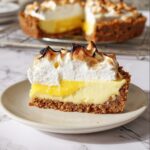
Lemon Meringue Cheesecake Recipe
- Prep Time: 30 minutes
- Cook Time: 60 minutes
- Total Time: 22 hours 30 minutes
- Yield: 12 servings
- Category: Dessert
- Method: Baking
- Cuisine: American
- Diet: Vegetarian
Description
This Lemon Meringue Cheesecake combines a rich, creamy cheesecake base infused with fresh lemon juice and lemon extract, layered on a buttery graham cracker crust, topped with a luscious store-bought lemon curd and a fluffy, golden-browned meringue. Perfectly balanced tartness and sweetness make it an elegant dessert ideal for special occasions or whenever you want to brighten up your dessert table with a citrusy twist.
Ingredients
Crust
- 2 cups graham cracker crumbs
- 2 Tablespoons sugar
- 1 stick (8 Tablespoons) butter, melted
Cheesecake Filling
- 3 packages (8 ounces each) cream cheese, softened
- 1 cup sour cream
- 2 cups sugar
- 4 eggs, room temperature
- 1/4 cup fresh squeezed lemon juice (about 3 lemons)
- 1 Tablespoon GOODMAN’s lemon extract
- 1 Tablespoon vanilla extract
Topping
- 2 cups lemon curd (store-bought jar)
- 4 egg whites
- 1/3 cup sugar
- 1/4 teaspoon cream of tartar
Instructions
- Prepare the crust: Place graham crackers in a blender and blend until fine crumbs form (about 2 sleeves of crackers). In a bowl, combine crumbs with sugar, stir well, then mix in melted butter until thoroughly blended. Line the bottom of a springform pan with parchment paper, press the crumb mixture evenly into the bottom, and set aside.
- Preheat oven: Set your oven to 350°F (175°C).
- Make cheesecake filling: In a stand mixer bowl, combine softened cream cheese, sour cream, sugar, and fresh lemon juice. Scrape down the sides and mix until smooth. Add eggs one at a time, mixing until fully incorporated. Stir in GOODMAN’s lemon extract and vanilla until the batter is creamy and well blended. Pour the filling over the prepared crust in the pan. Place a small dish of water on the bottom rack of the oven to help moisture during baking.
- Bake cheesecake: Place the springform pan on the center rack and bake for 1 hour. The center may still jiggle slightly. If the top is browning too fast, tent it with aluminum foil to prevent burning. After baking, turn off the oven and let the cheesecake stand inside for 20 minutes.
- Cool and refrigerate: Remove cheesecake from oven and cool completely on a wire rack. Once cool, spread lemon curd evenly over the top. Wrap the springform pan in foil and refrigerate overnight to set the cheesecake fully.
- Prepare meringue topping: A couple of hours before serving, whip egg whites with cream of tartar on medium-low speed until soft peaks form. Gradually add sugar in a steady stream while increasing the mixer to medium-high speed until stiff, glossy peaks form (about 45 seconds to 1 minute). Turn mixer to high for an additional minute until meringue is shiny and stands firmly.
- Apply meringue and create peaks: Remove cheesecake from fridge. Spoon the meringue onto the top generously, spreading to cover and sealing the edges to the pan. Using the back of a spoon, gently pull the meringue to form small peaks and curls for texture and appearance.
- Bake meringue topping: Preheat oven to 400°F (205°C). Place cheesecake on center rack and watch carefully, as the meringue browns quickly. Bake just a few minutes until the meringue is golden brown. Remove promptly to prevent burning.
- Cool and chill: Let the meringue cool for about 5 minutes on a wire rack, then return the cheesecake to the refrigerator to keep chilled until serving.
- Serve: Cut the cheesecake into 12 to 16 pieces (about 2-inch slices). Serve chilled, optionally garnished with sugared lemon slices for extra zestiness.
- Make ahead tip: For best results, make the cheesecake at least a day ahead to allow proper setting and flavor melding. If possible, chill for 24 hours before applying the meringue, as this improves texture. Avoid covering the meringue while chilling to maintain its peaks.
- Foil tent to prevent burning: To create a foil tent for baking, fold a large piece of aluminum foil in half and loosely place it over the cheesecake pan, ensuring it doesn’t touch the surface but shades the top during baking.
- About GOODMAN’s lemon extract: This high-quality lemon extract can be found in most grocery store baking aisles and adds excellent natural lemon flavor to baked goods like this cheesecake.
Notes
- This cheesecake is best made at least a day in advance to ensure proper setting and flavor development.
- Use room temperature eggs to help the batter mix smoothly and produce a silky cheesecake texture.
- Keep a close eye on the meringue when browning in the oven, as it can burn very quickly.
- Do not cover the cheesecake while chilling once the meringue is applied to preserve the fluffy peaks.
- If the cheesecake top browns too quickly during the first bake, use a foil tent to protect it without affecting the baking time.
- Store leftover cheesecake tightly covered and refrigerated; best consumed within 3-4 days for optimal freshness.