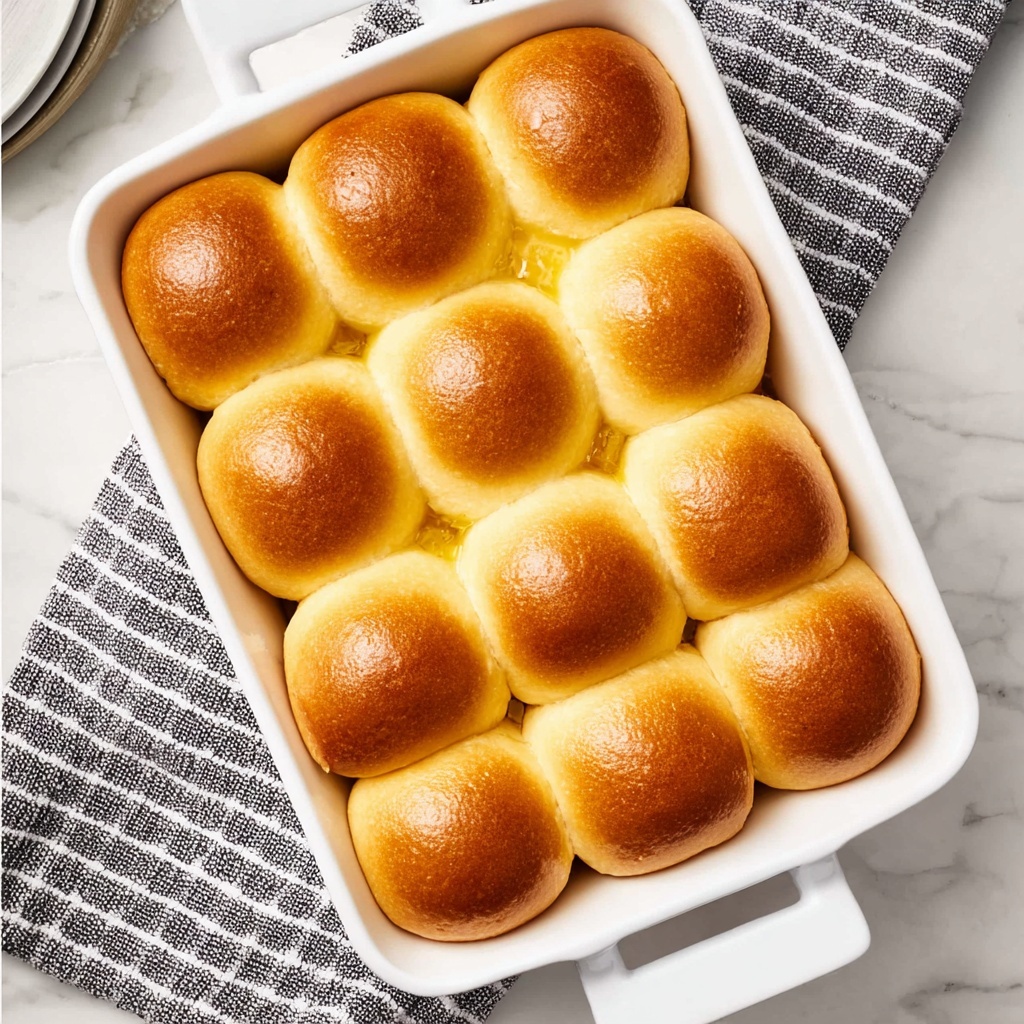
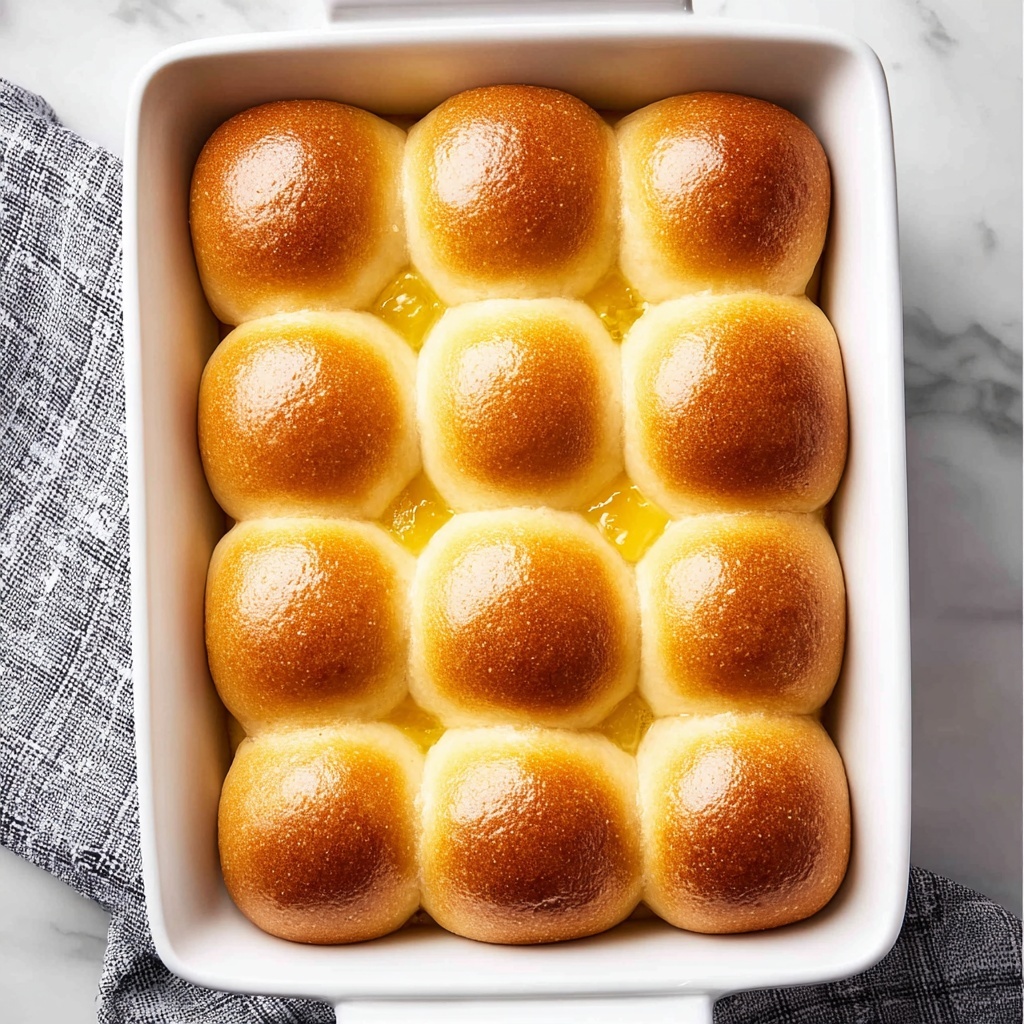
If you have ever dreamed of the perfect soft, fluffy, and buttery rolls fresh from your oven, then this Homemade Dinner Rolls Recipe is exactly what you need. These rolls are the pinnacle of comfort food, combining simple ingredients and straightforward steps to create a warm, golden batch that’s perfect for any occasion. Whether you’re gathering with family or just craving a delicious bread companion, these rolls will fill your kitchen with irresistible aromas and your table with smiles.
Ingredients You’ll Need
Nothing complicated here—just the essential pantry staples that come together to make these rolls incredibly tender, flavorful, and beautifully golden. Each ingredient plays a crucial role in the texture and depth of flavor you’ll love in every bite.
- Bread flour (4 cups): Gives the rolls the perfect chewy texture and structure.
- Instant yeast (2¼ teaspoons): Essential for yeast action, helping the dough rise beautifully without fuss.
- Kosher salt (1½ teaspoons): Enhances all the flavors and balances the sweetness.
- Milk (1 cup): Adds moisture and richness, contributing to a soft crumb.
- Unsalted butter (½ cup): Adds incredible tenderness and a lovely buttery taste—plus some to brush on top for that golden finish.
- Granulated sugar (¼ cup): Feeds the yeast and adds just the right touch of sweetness.
- Large eggs (2): Provide structure and richness while keeping the rolls soft.
How to Make Homemade Dinner Rolls Recipe
Step 1: Mix the Dry Ingredients
Start by whisking the bread flour, instant yeast, and kosher salt together in your stand mixer bowl. This ensures even distribution, which is key for a consistent rise and taste. Secure the dough hook so you’re ready for the wet ingredients!
Step 2: Warm the Milk, Butter, and Sugar
In a small saucepan, gently heat the milk, unsalted butter, and sugar until it reaches between 120°F and 130°F—the perfect temperature to activate the yeast without killing it. Then pour this lovely warm mixture into your dry ingredients.
Step 3: Combine the Ingredients
Set your mixer to low speed and gradually increase to medium, mixing for about 2 minutes until the mixture starts coming together into a sticky dough. This slow start is great for encouraging the yeast to work its magic gently.
Step 4: Add the Eggs
Slowly add the beaten eggs to the mix while the mixer is running on low, then bring the speed back to medium. Eggs enrich the dough and make the rolls soft and tender, so don’t skip this step!
Step 5: Knead the Dough
Turn the mixer to medium-high speed and let the dough hook knead the dough for about 3 minutes. This kneading develops gluten, which means your rolls will be irresistibly fluffy but still hold their shape perfectly.
Step 6: First Rise
Lightly oil a large bowl, then place your dough inside, turning it once to coat it evenly with oil. Cover with a clean towel or plastic wrap and set it aside somewhere warm to rise until it doubles in size. This usually takes between 60 and 90 minutes but the important thing is patience here—good things take time!
Step 7: Prepare the Pan and Shape the Rolls
Grease a 9×13-inch baking pan so your rolls won’t stick. Gently punch down your risen dough, turn it out onto a floured surface, and divide it into 15 equal parts. Roll each one into a smooth ball with gentle, even pressure for that signature soft but structured roll.
Step 8: Second Rise
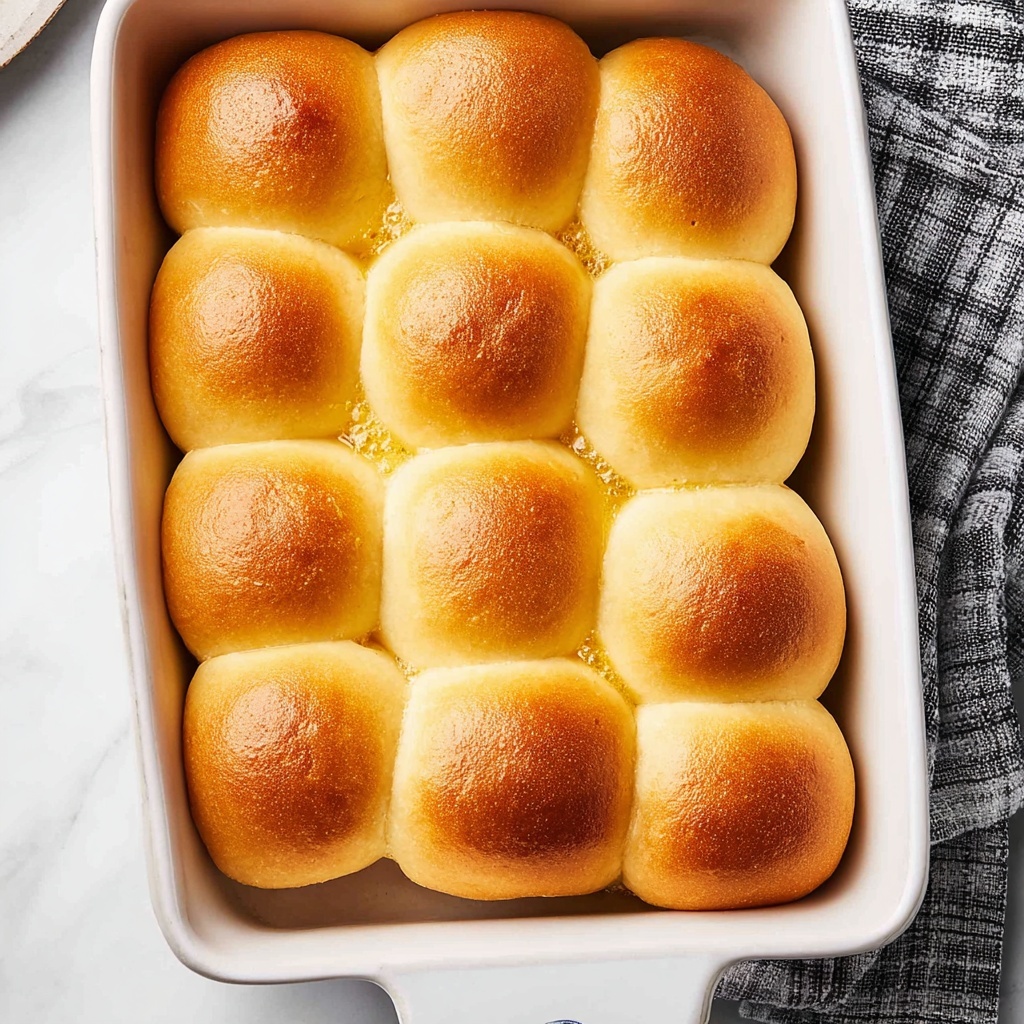
Arrange your rolls snugly in the pan, cover them again, and let them rise until doubled in size. This second rise helps develop that pillowy texture and shiny tops you’ll love pulling apart right out of the oven.
Step 9: Bake to Perfection
Although not detailed in the initial instructions, the next natural step is baking these beauties at 375°F (190°C) for about 25 minutes or until golden brown on top. Once baked, brush with melted butter for an irresistible shine and extra softness.
How to Serve Homemade Dinner Rolls Recipe
Garnishes
While these rolls are amazing on their own, brushing them with a little melted butter right after baking makes all the difference—it adds shine and keeps them soft. For a savory twist, sprinkle some freshly chopped herbs like rosemary or thyme on top before baking for a fragrant, gourmet touch.
Side Dishes
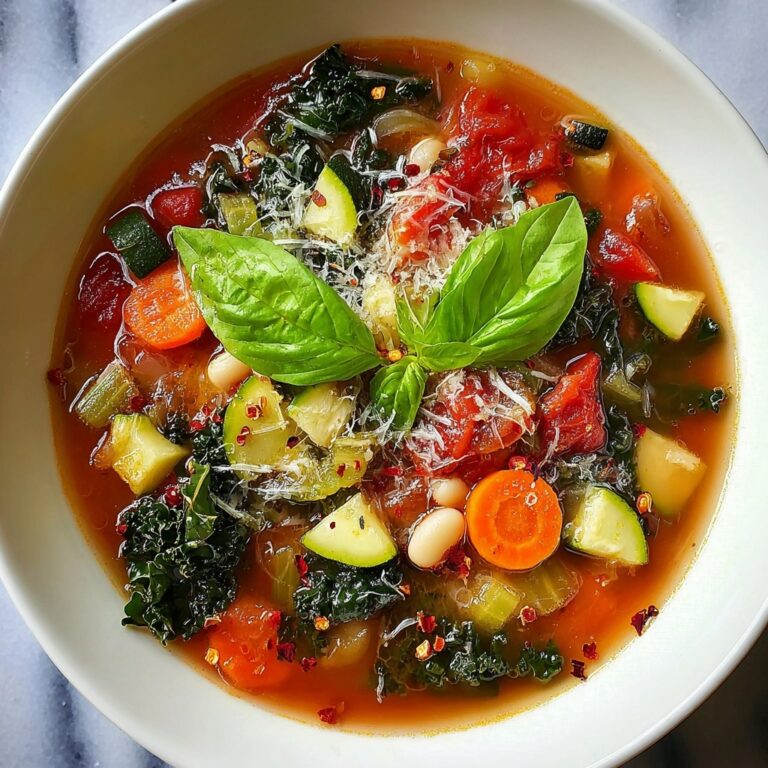
These rolls pair beautifully with virtually anything—from a hearty stew to a simple salad. Imagine dunking these soft rolls into warm, creamy soup or serving alongside roasted chicken for a classic comfort meal everyone will rave about.
Creative Ways to Present
Serve your Homemade Dinner Rolls Recipe as individual sliders by slicing rolls and filling them with meats, cheeses, or even a dollop of honey butter. They also make fabulous mini sandwich bases for brunch spreads or holiday buffets, adding a cozy, homemade vibe.
Make Ahead and Storage
Storing Leftovers
The best way to keep your rolls fresh is by storing them in an airtight container or resealable bag at room temperature for up to 3 days. Keeping them tightly sealed prevents them from drying out and maintains their soft texture.
Freezing
If you want to enjoy these rolls later, freeze them after baking using a freezer bag or container. Make sure they’re completely cooled, then freeze for up to 3 months. When you’re ready for a treat, thaw them at room temperature, and you’ll have fresh-tasting rolls in no time.
Reheating
To bring your rolls back to life, lightly sprinkle them with water and warm them in the oven at 300°F (150°C) for about 10 minutes. This method refreshes the softness and melts the butter inside, making every bite as delightful as fresh out of the oven.
FAQs
Can I substitute whole wheat flour for bread flour?
Yes, you can substitute whole wheat flour, but keep in mind it will change the texture and density of the rolls slightly. To maintain softness, try using half bread flour and half whole wheat flour and add a little extra moisture if needed.
Do I need a stand mixer to make this recipe?
While a stand mixer makes kneading easier and quicker, you can absolutely make these rolls by hand. Knead the dough on a floured surface for about 8-10 minutes until it’s smooth and elastic.
Why is the dough so sticky?
Sticky dough is common with enriched doughs that contain eggs and butter. Instead of adding more flour, which can make rolls tough, lightly oil your hands or use flour sparingly during shaping to maintain softness.
Can I make smaller or larger rolls?
Definitely! This Homemade Dinner Rolls Recipe is flexible. For smaller rolls, divide the dough into more pieces; for larger rolls, use fewer portions. Just adjust baking time as needed to ensure they’re cooked through.
How do I know if the rolls are fully baked?
The rolls should be golden brown on top and sound hollow when tapped lightly. An internal temperature of about 190°F (88°C) ensures they’re cooked all the way through without being dry.
Final Thoughts
This Homemade Dinner Rolls Recipe is a true kitchen treasure that never fails to impress with its soft crumb and buttery flavor. Once you try making these, there’s no going back to store-bought rolls—so grab your ingredients, get comfy in your kitchen, and let these rolls become your new favorite classic!
Print
Homemade Dinner Rolls Recipe
- Prep Time: 20 minutes
- Cook Time: 25 minutes
- Total Time: 2 hours 35 minutes
- Yield: 15 rolls
- Category: Bread
- Method: Baking
- Cuisine: American
Description
This Homemade Dinner Rolls recipe yields soft, fluffy, and buttery rolls perfect for any dinner table. Made with simple ingredients like bread flour, yeast, milk, butter, sugar, and eggs, these rolls are ideal for family meals or special occasions. The dough is enriched and allowed to rise twice for the perfect texture, then baked to golden-brown perfection.
Ingredients
Dry Ingredients
- 4 cups bread flour (480 grams)
- 2¼ teaspoons instant yeast (7 grams, 1 envelope)
- 1½ teaspoons kosher salt (5 grams)
- ¼ cup granulated sugar (50 grams)
Wet Ingredients
- 1 cup milk (227 grams)
- ½ cup unsalted butter (113 grams, 1 stick), plus more for brushing
- 2 large eggs (100 grams, room temperature and beaten)
Instructions
- Mix Dry Ingredients: In the bowl of a stand mixer, whisk together the bread flour, instant yeast, and kosher salt. Secure the bowl to the mixer, fitted with a dough hook attachment.
- Warm Wet Ingredients: In a small saucepan, heat the milk, butter, and granulated sugar over low heat until the mixture reaches 120-130°F (49-54°C). Remove from heat and add to the dry ingredients in the mixer bowl.
- Combine Ingredients: Start mixing on low speed, gradually increasing to medium, and mix for about 2 minutes until the ingredients start coming together in a rough dough.
- Add Eggs: Add the beaten eggs to the mixer and continue mixing starting on low speed, then increase to medium until the eggs are fully incorporated into the dough.
- Knead Dough: Increase the mixer speed to medium-high and knead the dough for 3 minutes until it becomes smooth and elastic.
- First Rise: Lightly oil a large bowl and transfer the dough to it, turning the dough to coat it fully with oil. Cover the bowl and let the dough rise in a warm spot until doubled in size, about 60-90 minutes.
- Prepare Baking Pan: Grease a 9×13-inch baking pan with butter or oil.
- Shape Rolls: Punch down the risen dough and turn it out onto a lightly floured surface. Divide the dough into 15 equal portions, about 65 grams each. Roll each portion into a smooth, round ball and place them evenly spaced in the prepared baking pan.
- Second Rise: Cover the rolls and let them rise until nearly doubled in size, about 60-90 minutes.
- Bake: Preheat the oven to 350°F (175°C). Bake the rolls for about 25 minutes until golden brown on top.
- Finish: Remove from the oven, brush the tops with additional melted butter for a soft, shiny finish, and serve warm.
Notes
- Ensure milk and butter mixture is cooled to 120-130°F before adding to yeast to avoid killing the yeast.
- Use bread flour to achieve the perfect chewy and soft texture in the rolls.
- Allowing the dough to rise twice ensures the rolls are light and fluffy.
- Roll dough balls tight for uniform shape and even baking.
- For extra flavor, brush rolls with garlic butter before serving.
- Store leftover rolls in an airtight container at room temperature for up to 3 days or freeze for longer storage.